



The Periplus of Hanno recounts a 5th-century B.C. Carthaginian maritime expedition to West Africa. It describes a landscape aflame and of a fiery mountain whose identity remains mysterious. It’s a cool detail you can spin out into a portal to another world or an obstacle to place before your party as the PCs travel!
This post is brought to you by beloved Patreon backer Joel Dalenberg. Thanks, Joel—you rock!

A periplus is a sort of seacoast map in words, written instead of drawn. The text of a periplus starts you in a particular location along the coast, then says, “If you sail in this direction, here are the ports and landmarks you come to, in the order they appear.” I’ve written two previous blog posts about other peripluses. What can I say, I’m a sucker for a sea story.
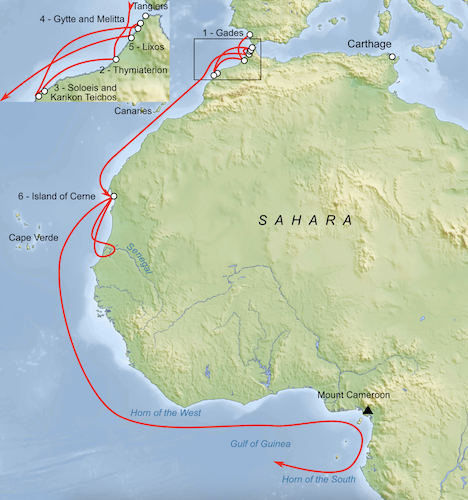
The Periplus of Hanno is a document purporting to be a Greek translation of an inscription in the Temple of Baal in Carthage recounting what was seen in the sea voyage of Hanno, a king(?) of Carthage who sailed west out of the Mediterranean Sea and south down the cost of West Africa. The Periplus of Hanno (hereafter just “the Periplus”) is quite short: a mere 630 words in Greek. We have several copies of the Periplus, both in Greek and in Latin translation.
The oldest Greek manuscript of the Periplus has a neat history of its own. It was part of a collection of minor Greek geographical treatises, probably assembled in the 500s A.D. and then recopied in the 800s in Constantinople. About a decade after the Ottoman Turks took Constantinople (so in the 1460s), a cardinal took the manuscript to a Catholic convent in Basel, Switzerland. When Basel went Protestant, scholar-printer Froben of Basel took it from the convent, put it in his patron’s private library in Heidelberg, Germany, and published a copy in 1533. During the Thirty Years’ War, the library got looted by a Catholic force, which sent the manuscript to the Vatican. 150 years later, when Napoleon looted the Vatican, the manuscript found itself on its way to Paris, where it remained for a few decades until it was returned to Heidelberg.
The 1533 publication of the Periplus made the text popular again after almost a millennium of dormancy. The timing was right for European interest in the manuscript, for Europeans were paying more attention to West Africa than perhaps ever before. Portugal and Spain had begun buying West Africans for forced labor in the New World. The Kingdom of Kongo was falling under Portuguese sway.
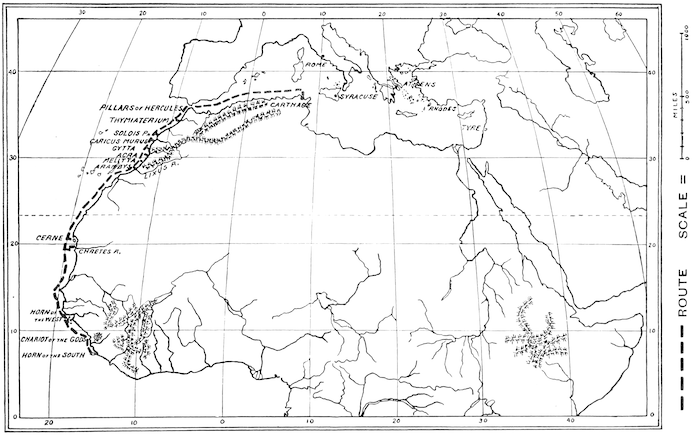
With Africa now hip and interesting, European scholars busied themselves trying to determine what specific locations the Periplus described. Was the “great river full of crocodiles and hippopotami” the Gambia River? The Senegal River? The Sewa of Sierra Leone? Centuries of scholars have offered clever suggestions and new ways to read the text, none of which ever really caught on. Despite the gallons of ink shed to analyze the Periplus, we don’t understand it much better than we did when it first came to light.
I’ll touch briefly on the part of the Periplus that’s gotten the most attention. The text ends with Hanno encountering a tribe of hairy people: “We took three of the women, who bit and scratched their leaders, and would not follow us. So we killed them and flayed them, and brought their skins to Carthage.” Hanno called them gorillae. When in 1847 two naturalists first described a big hairy ape they encountered in Liberia, they named it for the hairy people described in the Periplus. The encounter with the hairy women is obviously fucked up, but it seems pretty straightforward to me: Hanno kidnapped some people he thought looked weird, and when they didn’t like being kidnapped he killed them. Efforts to identify the gorillae with the apes named for them or with modern ethnic groups seem to me to miss the point.
Credit: Bourrichon. CC BY-SA 3.0
To me, the most interesting part of the Periplus is all the fire. Towards the end of the journey, just before encountering the gorillae, things got hot:
“Landing there during the day, we saw nothing but forests, but by night many burning fires, and we heard the sound of pipes and cymbals, and the noise of drums and a great uproar. Then fear possessed us, and the soothsayers commanded us to leave the island.
“And then quickly sailing forth, we passed by a burning country full of fragrance, from which great torrents of fire flowed down to the sea. But the land could not be come at for the heat. We sailed along with all speed, being stricken by fear.
“After a journey of four days, we saw the land at night covered with flames. And in the midst there was one lofty fire, greater than the rest, which seemed to touch the stars. By day this was seen to be a very high mountain, called Chariot of the Gods.
“Thence, sailing along by the fiery torrents for three days, we came to a bay, called Horn of the South.”
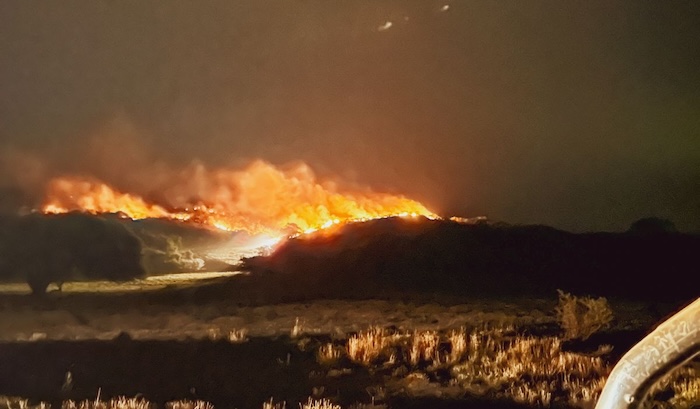
A 1913 translation of the Periplus (the one I’m quoting above) helpfully identifies all this fire with a Sahel practice of burning dry grasslands to help the grass grow back richer for their livestock. Hanno must have just happened to sail past while all the fires were being lit! Of course it would be a remarkable coincidence that Hanno happened upon the area in the one year when folks apparently decided to burn down the entire coast, and anywy Hanno explicitly describes a forest. Other folks have suggested the Chariot of the Gods was the forested Lion Mountains of coastal Sierra Leone and the jungle just happened to be on fire. Maybe it was a historic drought and there had also been lightning strikes and so the whole coast just legitimately happened to be aflame.
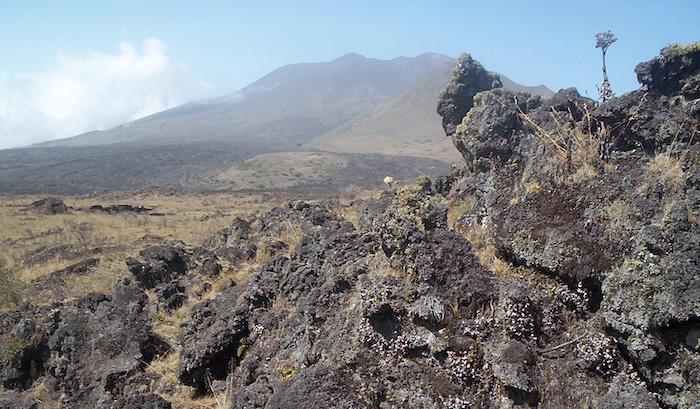
That said, a lot of this sounds like volcanic activity. Flowing torrents of fire? Can’t approach the land due to the heat? A lofty fire that seemed to touch the stars? That’s not a prairie fire, that’s Mount Doom! The issue is that West Africa isn’t known for its volcanic activity, the coast least of all. If the Chariot of the Gods was a volcano, it would almost have to be Mount Cameroon. But if it was Mount Cameroon, that would mean Hanno sailed 5,000 miles to get there and 5,000 back—an astonishing, borderline absurd, journey for the 5th century B.C.
Credit: Amcaja, CC BY-SA 3.0
In your game, the mystery of Hanno’s fiery mountain can make it to the table in some different ways. One of the most straightforward is that this fiery place Hanno found himself wasn’t West Africa but hell (or the Dreamlands or whatever’s appropriate for your setting). Critically, Hanno didn’t just stumble through a portal into hell. He also found his way back out again, presumably taking the same route back. Also presumably his portal was invisible or inconspicuous since he didn’t comment upon it, and no one has commented it on it since. So if your party needs to make a trip to some other plane of existence and also wants to return, retracing Hanno’s steps might be a way to do it. Though of course since there are no shortage of ships rounding the Gulf of Guinea without going to hell, there’s probably some detail of the story your party will need to replicate: perhaps sailing in a Punic-style galley will provide the missing ingredient!
Hanno’s region of fire can also be a memorable obstacle during travel. (The “obstacle” is the single interesting encounter you have the party play through during a travel sequence so travel feels meaningful and time-consuming.) The place where the party needs to come ashore is on fire and “the land could not be come at for the heat”: it’s physically too hot to put ashore. How do the PCs overcome this obstacle?
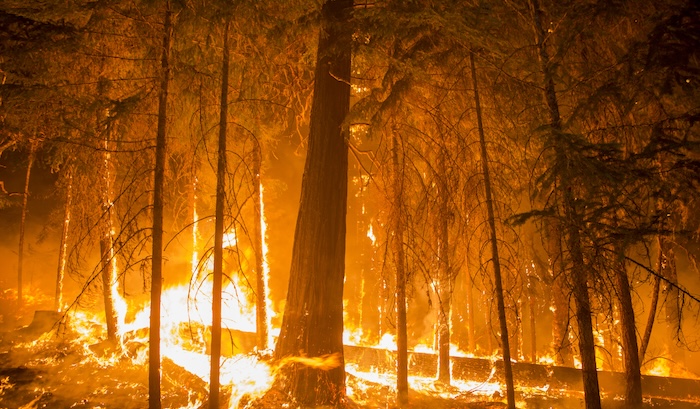
Of course not all obstacles need to be ultimately negative. Maybe the place the party needs to come ashore is full of prairie fires, even at night, accompanied by “the sound of pipes and cymbals, and the noise of drums and a great uproar.” This is intimidating; the party might flee just as Hanno’s soothsayers drove the Carthaginians to. But if the party puts ashore, they find it’s simply the season of burning the grasses to produce better fodder and the locals use it as a time of celebration. People are in high spirits and feeling generous.
Make sure you don’t miss a blog post by subscribing to my no-frills, every-other-week mailing list! I also have a signup that’s only for big product releases!
Looking for material for your game tonight? My back catalog has hundreds of great posts, all searchable and filterable so you can find something from real history or folklore that fits exactly what you need!
Come follow and chat with me on Bluesky! I’m @moltensulfur.bsky.social.
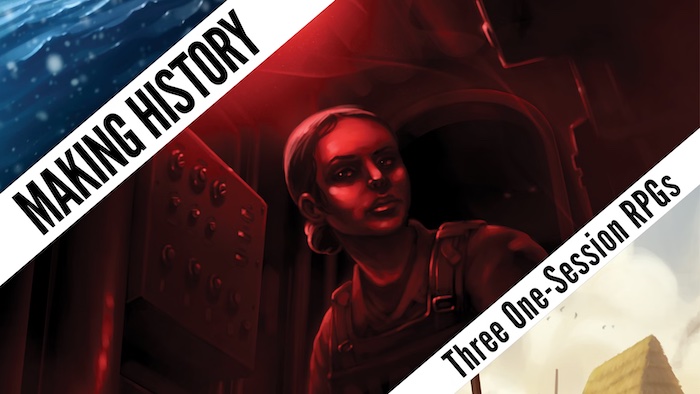
Check out my book Making History: Three One-Session RPGs! It’s three awesome historical one-shots with pregenerated characters and a very simple rules system designed specifically for that story. Norse Ivory is a game about heritage and faith in the Viking Age. A Killing in Cahokia is a murder mystery in the Native American temple-city of Cahokia. And Darken Ship is a horror-adventure starring junior sailors on a U.S. Navy warship who wake up one morning to discover they’re alone on a ship that should carry three thousand.
Sources:
The Periplus of Hanno: A Voyage of Discovery down the West African Coast by a Carthaginian Admiral of the Fifth Century B.C. translated by Wilfred H. Schoff (1913)
The Voyage of Hanno by Livio C. Stecchini
The “Periplus of Hanno” in the History and Historiography of Black Africa by P.E.H. Hair in History of Africa (1987)